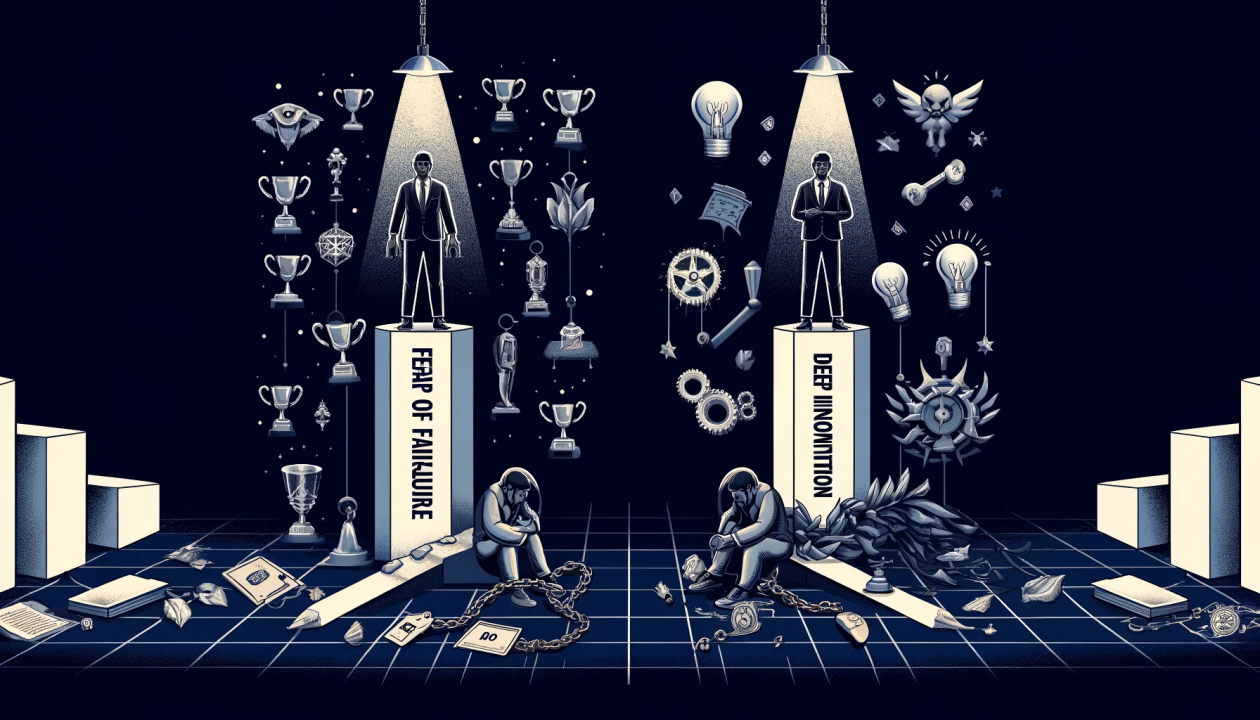
In many organizations, the incessant search for success creates a culture that values only positive results and minimizes or even penalizes mistakes. Although the aspiration to success is natural and necessary, a culture that does not tolerate failure can, paradoxically, stifle deep innovation. Innovating in a meaningful way often requires experimentation, risks and, inevitably, errors. This article explores how a culture of success can limit innovation and offers suggestions for cultivating an environment that values learning through error..
1. Fear of Failure and Risk Aversion
When success is the only acceptable outcome, fear of failure can become paralyzing. Employees may avoid taking risks or coming up with innovative ideas if they believe a mistake could jeopardize their careers.. The resulting risk aversion can lead to stagnation, where only safe and tested ideas are explored. Innovative companies like Amazon take a different approach, encouraging your employees to experiment and see failure as a part of the innovation process. Jeff Bezos, founder of Amazon, said: “If you double the number of experiments you do per year, you will double your inventiveness.”
2. The Overvaluation of Immediate Results
A culture focused only on short-term results can discourage innovation projects that require time and patience to mature. Deep innovations often require a significant investment of resources and an extended period of development and iteration. When the pressure for quick results is intense, promising projects may be abandoned prematurely. For example, the development of the iPhone involved years of research and development that did not yield immediate results, but Apple supported this period, culminating in one of the most innovative products of all time.
3. Lack of Encouragement for Experimentation
A successful culture may neglect the importance of experimentation and continuous learning. Profound innovation often emerges from a series of experiments, many of which fail. Every failure provides valuable data and insights that can lead to eventual success. Pixar, known for its innovative culture, promotes an environment where failure is seen as a learning opportunity. They follow the philosophy of “fail fast and often” to iterate quickly and achieve creative excellence.
4. Creating a High Pressure Environment
Environments where success is overly valued can create intense pressure on employees, leading to burnout and reduced creativity. Innovation requires a safe space where employees can think freely and explore new ideas without the constant fear of reprisal. A Stanford University study found that stress and excessive pressure can significantly reduce a team's ability to innovate.
Cultivating a Culture of Learning and Innovation
To overcome the limits imposed by a culture of success, Organizations can adopt several practices that encourage innovation through learning from mistakes:
- Promote a Growth Mindset: Encourage employees to see mistakes as learning opportunities. Reward try and effort, not just successful results.
- Encourage Experimentation: Create an environment where experimentation is encouraged and failures are seen as a natural part of the innovative process.
- Value the Long Term: Balancing the pressure for immediate results with investments in long-term projects that have the potential to generate profound innovations.
- Offer Support and Resources: Provide employees with the resources they need to explore new ideas and sustain innovative projects, even if they don't bring immediate results.
While success is a desirable goal, a culture that does not tolerate mistakes can seriously limit an organization's ability to deeply innovate. By adopting a more balanced approach and valuing continuous learning, companies can create an environment where innovation flourishes.
“Innovation is a function of learning over time and accepting failure as part of the process. Without it, We can only improve what already exists, not create something new.” — Ed Catmull, co-founder of Pixar