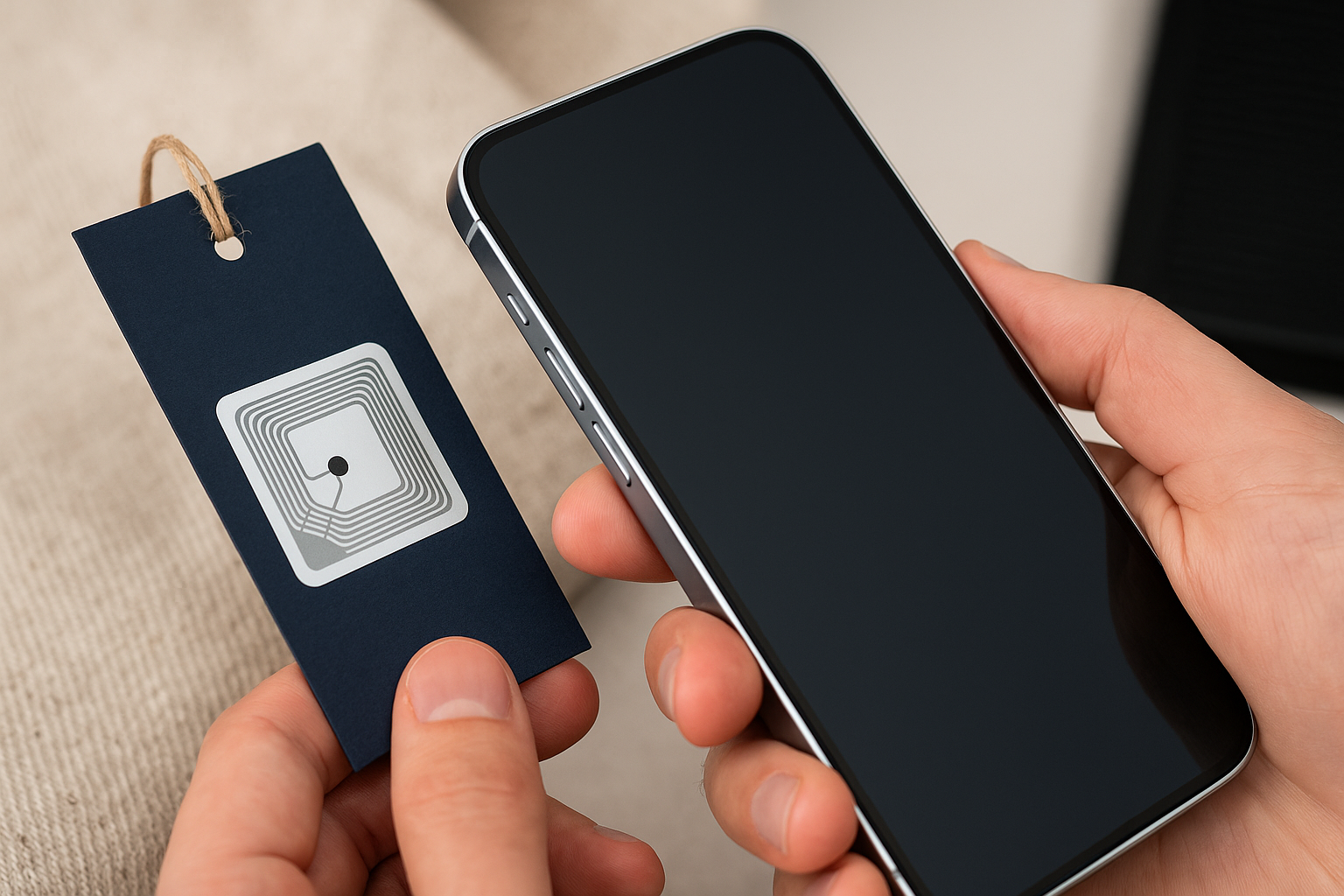
The history of technology in retail and industry shows that many innovations first emerge as internal efficiency solutions and then become customer relationship opportunities.. This is the case with RFID technologies (Radio-Frequency Identification) e NFC (Near Field Communication). Created to optimize product identification and tracking processes, they begin to gain new meanings as they go beyond the frontiers of logistics and reach the hands of customers.
RFID works through electronic tags (tags) that transmit data via radio frequency, allowing products to be identified without physical contact, quickly and accurately. At the beginning, Its biggest difference was reducing losses, facilitate inventories and provide real-time visibility into the movement of goods. The NFC, mainly used in cards, smartphones e wearables, is designed to securely transfer data by proximity, serving as the basis for contactless digital payments. Both technologies were born, therefore, focused on operational efficiency.
However, the boundary between efficiency and experience begins to disappear. fashion brands, for example, already use RFID tags to provide proof of authenticity of luxury pieces, creating a layer of trust in markets where counterfeiting is a serious problem. Retailers explore NFC to transform packaging into interactive portals, in which the consumer, when approaching the cell phone, can access detailed instructions, videos of use or exclusive benefits. In some cases, technology even allows you to establish individualized relationship programs, in which each physical interaction with the product generates data to personalize the customer journey.
This movement brings a clear message to executives: just like what happened with the QR Code, RFID and NFC are no longer mere technical tools to become strategic platforms. What was previously invisible to the consumer can now be used as an engagement lever, differentiation and building trust. When you bring your smartphone closer to a product, the customer is not just consuming information — they are being invited to a dialogue with the brand.
But, as in the case of QR Code, o desafio não está na tecnologia em si, e sim no conteúdo que se decide entregar. Uma etiqueta NFC que leva a um manual digital pode ser útil, mas pouco memorável. Já uma etiqueta que conta a história de como aquele produto foi feito, garante sua procedência, oferece um benefício exclusivo e ainda conecta o consumidor a uma comunidade pode criar uma experiência marcante. O diferencial está em como a empresa interpreta a tecnologia como parte de sua estratégia de relacionamento.
RFID e NFC, therefore, simbolizam uma mudança de mentalidade. Elas mostram que a cadeia de suprimentos e o ponto de venda não são mais esferas separadas, mas partes de uma mesma narrativa. O que começa como controle de estoque pode terminar como valor percebido pelo cliente. E nesse percurso, a pergunta que volta a se impor é a mesma feita ao QR Code: qual história sua empresa quer contar quando cada produto se torna uma oportunidade de diálogo direto com o consumidor?