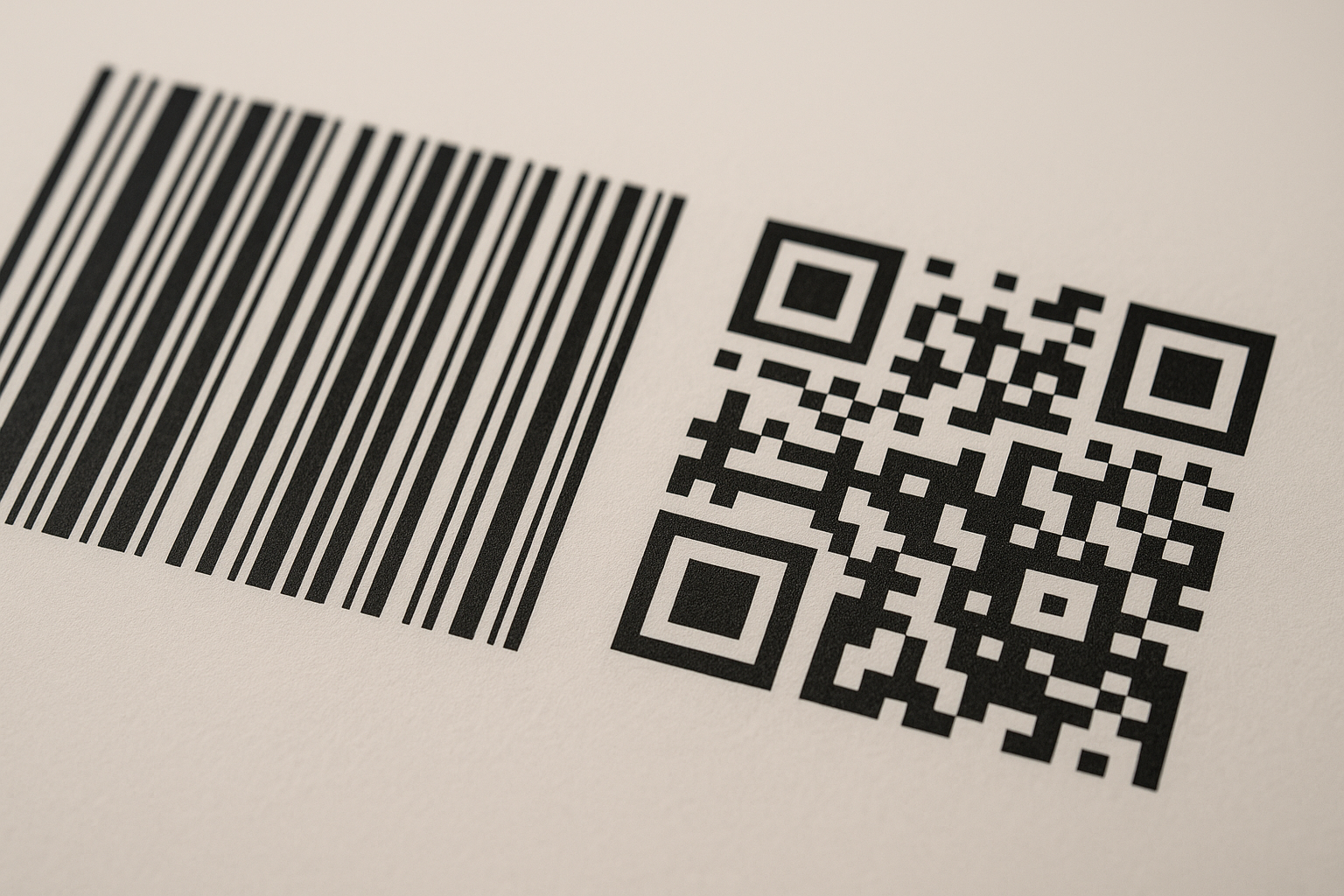
For decades, the barcode was one of the greatest symbols of efficiency in global retail. Created in 1952 and adopted on a large scale from the 1990s onwards. 1970, he brought speed, accuracy and standardization of checkout processes, logistics and inventory management. Its simple logic — parallel bars representing a unique numerical sequence — has enabled invaluable productivity gains. But this simplicity is also its limitation: the barcode doesn't talk to anyone, it is just the ID of a product. They organize, but it doesn't tell stories.
It was exactly this need to count more than numbers that motivated, in 1994, the development of the QR Code, in Japan, by Denso Wave. Initially designed to track automotive parts, he soon proved to be much more powerful. By storing a large amount of information in a small graphical space, became a bridge between the physical and the digital. And when smartphones popularized reading, a world of possibilities opened up. Suddenly, any packaging, advertisement or label could lead the consumer to a website, to a promotion or a video. But even so, in most cases, use remained limited.
Now, However, We are facing a structural change. A GS1, entity that regulates product identification standards in the world, established that until 2027 the barcode will be progressively replaced by the QR Code. This movement, apparently technical, hides a much deeper transformation. This is a change in the way companies relate to their consumers and, about everything, in the level of responsibility they assume towards them.
The QR Code is not just a more modern code; it is a strategic space. It allows packaging to stop being a mere shell and become a communication channel. Ali, may not only be the price or description of the product, but information about its origin, its environmental impacts, the supply chain, the purpose of the brand, care for sustainability, instructions for use or even the history of the founders. Each product now carries with it the complete narrative of the company that produces it.
This is the point that interests executives. Change is not about technology, but about trust. Today’s consumer demands transparency and coherence. He doesn't just want to know how much it costs, but also who is behind the brand, how it operates and what values it defends. If before the barcode solved efficiency problems, now QR Code challenges companies to solve reputation problems, purpose and legitimacy.
In practice, This means that each brand will have to choose which story they want to tell. The QR Code will be a constant invitation to accountability. An opportunity to reinforce commitments, but also a risk for those who choose silence or superficiality. He, when scanning the code, the consumer only finds an empty promotional link, the company will have wasted the chance to build a relevant dialogue. On the other hand, if you find traceability data, sustainability certificates, authentic messages about organizational culture and useful information for using the product, the trust relationship is strengthened.
Executives need to understand that this paradigm shift goes beyond marketing. The QR Code inaugurates a new strategic layer: it connects consumption to reputation in real time. It is a competitive differentiation mechanism, because in markets saturated with similar products, history and transparency can become decisive factors in choosing. At the same time, requires investment in information governance, systems integration and, about everything, a genuine willingness to open the company's doors to consumer scrutiny.
Like this, the transition from barcode to QR Code should not be seen as a change of tools, but as an evolution of mentality. The barcode represented the 20th century of efficiency. The QR Code represents the 21st century of transparency and corporate storytelling. It marks the transition from an economy where it was enough to organize internal data to an economy where it is necessary to share external information.
In the end, The big question for companies is not technical, but strategic: what story are you willing to tell your consumer? The QR Code just opens the door. What each company decides to put behind it will be the true competitive differentiator of the future.