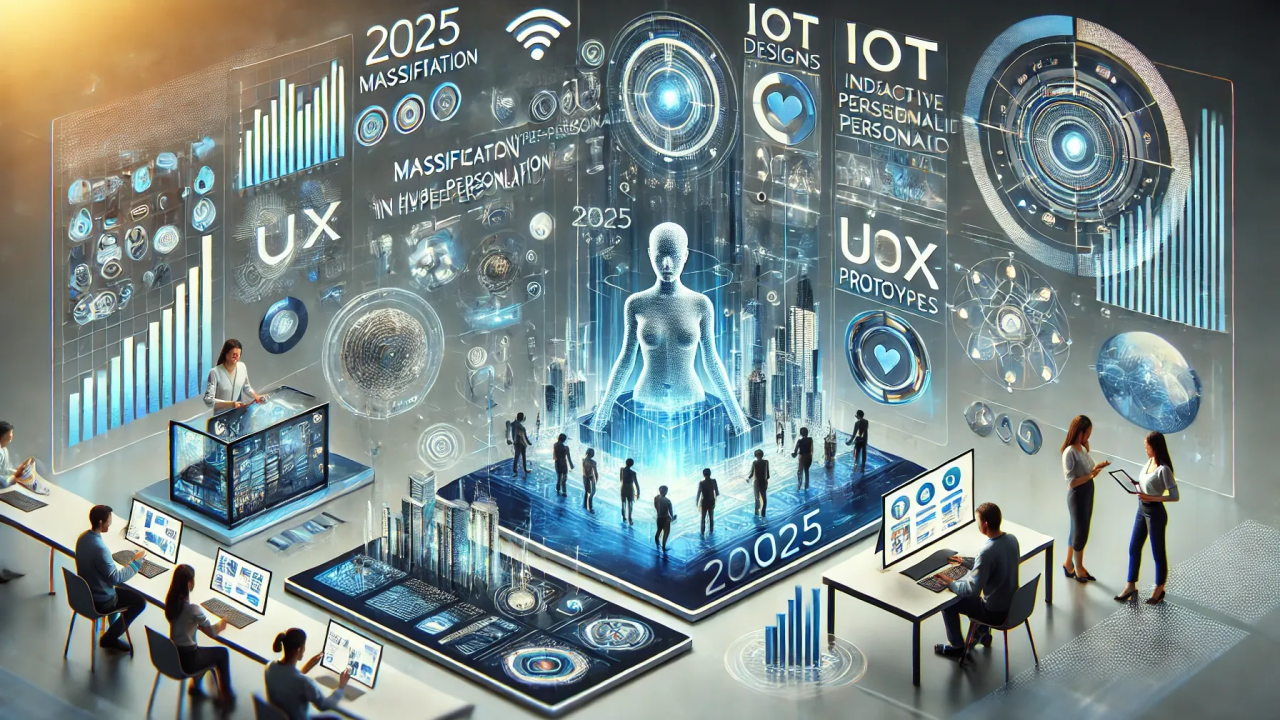
As we approach 2025, user experience design (UX) is being shaped by three fundamental axes: technological evolution, massification and hyperpersonalization, and a customer-oriented organizational culture. Understanding and integrating these axes will be crucial for companies that want to offer consistent experiences, impactful and user-centered.
Technological Evolution: connecting UX to artificial intelligence and IoT
Advancing technology is redefining what users expect from digital interactions. Artificial intelligence (IA), Augmented Reality (RA), Virtual Reality (RV) and Internet of Things devices (IoT) They are no longer just trends, but essential tools for creating immersive and intuitive experiences. In 2025, AI is expected to be further integrated into design, enabling systems capable of predicting behaviors, customize interactions and automate processes fluidly.
For example, the adoption of “contextual digital assistants” — systems that understand the user’s emotional state and context — will be common practice. Companies like Spotify are already exploring AI to adapt content in real time, but the tendency to 2025 is to go beyond, offering highly contextual recommendations based on data like geolocation, biometrics and previous interactions.
Massification and Hyperpersonalization: the challenge of balance
A paradox of modern UX lies in the challenge of delivering personalized experiences at scale. Consumidores esperam que empresas reconheçam suas necessidades individuais enquanto mantêm a eficiência e acessibilidade de soluções globais. Isso exige uma abordagem estratégica de massificação combinada à hiperpersonalização.
Por meio de análise avançada de dados, UX designers podem criar “interfaces adaptativas”, que moldam a experiência de acordo com o perfil do usuário sem que este perceba os ajustes acontecendo. Um exemplo recente é o Amazon Prime Video, que utiliza algoritmos para ajustar não apenas recomendações, mas também o layout da interface com base em preferências regionais e padrões de navegação. In 2025, This practice should include customizations based on cultural identity and even ethical values of the consumer, creating more human and connected experiences.
Customer-Focused Organizational Culture: transforming internal processes
No matter how advanced the technology or personalization strategies, The success of a good user experience depends on an organizational culture rooted in customer focus. This transformation starts internally, with team training, redefining processes and adopting user-centered agile methodologies.
Organizations that prioritize UX don’t just see it as a step in product development, but as a core value. Companies like Airbnb exemplify this approach, where UX is everyone’s responsibility — from design to customer support. For 2025, the integration between UX and organizational culture is expected to advance further with practices such as “participatory design”, where customers themselves actively participate in creating solutions.
This approach creates a continuous feedback loop that, in addition to improving products and services, also promotes brand loyalty. As Jeff Bezos said, founder of Amazon: “We see our customers as guests at a party, and we are the hosts. It’s our job to make every aspect of your experience a little better every day.”
Combine technological axes, personalization and organizational culture will be the most solid path to building UX experiences that not only meet, but exceed expectations 2025.