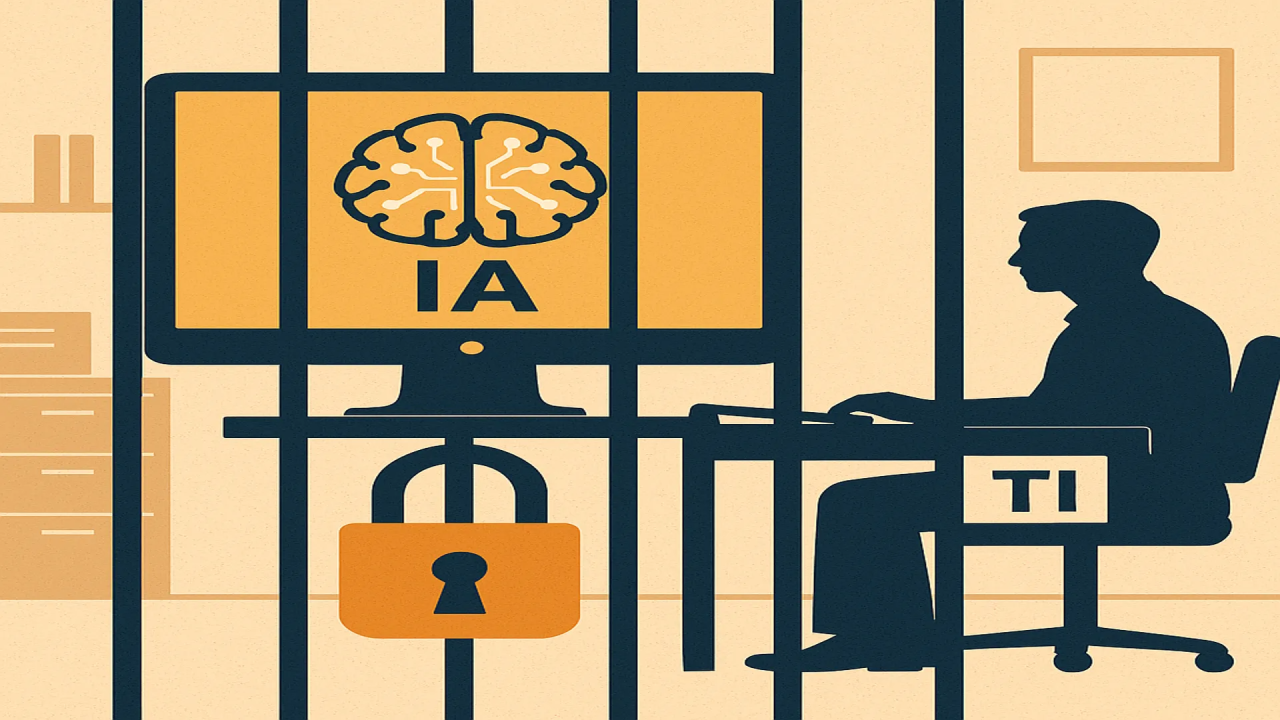
There is a silent image that is repeated in many companies. Whenever we talk about artificial intelligence, eyes turn to the IT area. It's as if, by organizational instinct, responsibility for AI would naturally belong to that group of experts who have always taken care of the technological infrastructure. The logic seems simple: if it's technology, It's up to the technology team. But this logic is wrong — and more than that, is dangerous.
This automatic attribution reveals a symbolic belief that spans decades of functional structure: the idea that technology is a sector, and not an organizational competence. The IT area has become, over time, a kind of black box where everything digital must fit — even when this requires a type of performance that goes far beyond technique. In the case of artificial intelligence, This is shown particularly clearly.
AI is not just a technological tool. She is a paradigm shift. And like every paradigm shift, it requires more than technical knowledge: it demands review of processes, reconstruction of routines, role reconfiguration, reinvention of thinking. This is where the traditional mental model starts to break down.
TI, no matter how strategic it is, does not operate alone. It doesn't decide where to apply AI. Not at the forefront of business decisions. Does not accompany the customer at the end, doesn't know the user's pain with the depth that marketing, service or operations know. Assigning responsibility for AI exclusively to IT is like expecting the house's electrician to teach the resident how to use light better. Can he explain the voltage, adjust the wires, ensure the network works. But it is the resident who chooses what to light.
This illusion of exclusive technical responsibility creates a deep cultural problem. By pushing AI into a department, the organization loses the chance to awaken a sense of protagonism in other areas. Marketing awaits IT. HR expects IT. Service awaits IT. And while they wait, waste time. More than that: stop learning. Because artificial intelligence is, before everything, a matter of repertoire.
Only those who allow themselves to experiment can take advantage of AI. Who wonders where automation can reduce waste?. Who identifies patterns in data and sees new possibilities. Who realizes that there is intelligence in processes — but also in errors. This intelligence is spread throughout the company. And it cannot be concentrated in just one area.
It is clear that IT plays a fundamental role. But this role is not that of guardian. He is a facilitator. It’s up to IT to build bridges, translate languages, support experimentation. It's up to the leadership, on the other hand, assume that AI is a business topic, not infrastructure. A strategic subject, not just technical. Everyone's responsibility, and not from a sector.
The companies that advance in artificial intelligence are precisely those that have dissolved this outdated organizational symbol. They are those who created interdisciplinary forums, who mixed technology with business, that gave AI a place in strategy — and not just on the server. These are the ones where IT sits at the table with marketing, with product, with legal, with us. And they all speak the same language: the language of transformation.
Insisting on functional logic is insisting on a management model that is no longer sustainable. The speed of change no longer allows us to wait for one area to think for everyone. The intelligence, to be artificial, it must first be collective. It needs to spread. It needs to be understood as an asset that requires curiosity, openness and desire to learn.
In this new scenario, the biggest risk is not not having AI. It's having her imprisoned. Placed on a shelf, under the care of those who were trained to operate systems — but not to imagine futures.
The good news is that this change has already begun in many companies. The bad news is that, in many others, we are still waiting for IT to take the initiative. It's time to turn that key.