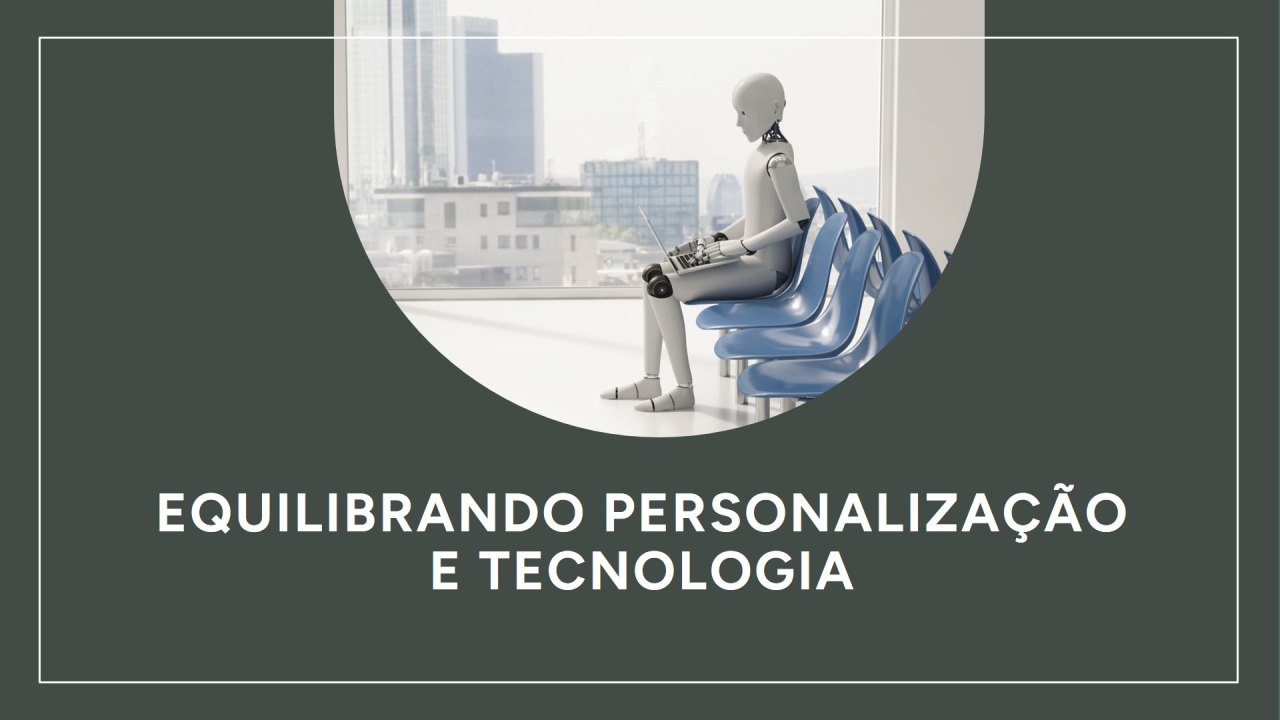
That digital era, Consumer expectations for customer service are constantly evolving. On the one hand, there is a growing demand for more personalized and humanized services, that understand the unique needs of each individual. On the other, the potential of artificial intelligence (IA) to revolutionize customer service is indisputable, promising greater efficiency, availability 24/7 and even predicting future consumer needs. However, This convergence of desires and technological capabilities creates a palpable tension: How can we harmonize the search for more personal and human service with the scalable and automated advantages that AI offers?
The key to navigating this tension may lie in the careful and intentional integration of AI into the customer service process, so that it does not replace, but rather complement and enrich human interaction. The challenge is to use AI to better understand customers, analyze large volumes of data to offer a more personalized service, while maintaining an essential human element in the decision-making process.
One of the main arguments in favor of AI in customer service is its ability to process and analyze large amounts of data quickly., which can lead to deeper insights into consumer preferences and behaviors. This can enable customization at scale that would be impossible to achieve manually. However, personalization is not just a matter of data analysis. Empathy and human understanding are crucial to interpreting this data in a way that makes sense for each individual customer.
Therefore, the solution may lie in a hybrid model, where AI is used to collect and analyze data, while humans are responsible for interpreting this data and making decisions based on empathy and emotional understanding. This approach not only allows for more personalized service, but also keeps humanization at the center of the customer experience.
Besides that, The use of AI is not limited to data analysis. Chatbots and virtual assistants, when well programmed and integrated, can provide an effective first line of service, freeing up human responders to deal with more complex and emotionally sensitive issues. This balance between automated efficiency and the human touch is key to creating a customer service experience that is both personal, efficient and scalable.
Ultimately, The future of customer service lies in our ability to unite the complementary forces of AI and human interaction. In doing so, We can create service systems that not only understand our customers on a deeper level, but also respond to your needs in a more intuitive and emotionally intelligent way.
As Steve Jobs said, “Technology is nothing. What matters is having faith in people, that they are basically good and intelligent, and if you give them tools, they will do wonderful things with them”. In the context of customer service, This means creating AI tools that empower professionals to deliver exceptionally personalized and human service.